
Tile adhesives & epoxy grouts
Tile and stone adhesives; stain-free natural stone installation
A reliable build-up for large-format tiles and natural stone that resists staining and debonding.
Tile & stone adhesives products
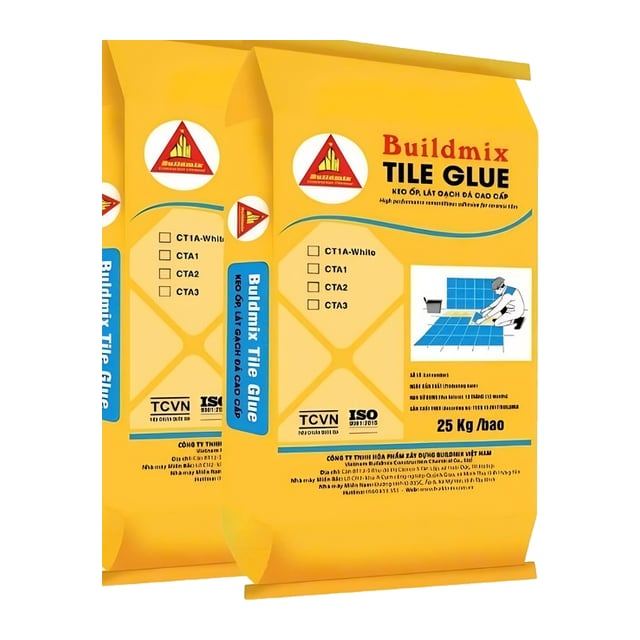 BuildmixBuildmix Tile AdhesiveCementitious tile adhesive TDS · 3 pages
 DemexDemex R600Two-part epoxy bonding adhesive for tiles and stone TDS · 7 pages
Summary table
| Product | Material type | Consumption | Packaging | Documents |
|---|---|---|---|---|
| Buildmix Tile Adhesive | Cementitious tile adhesive | 3.5–4.5 kg/m² | 25 kg bag | TDS · 3 pages |
| Demex R600 | Two-part epoxy bonding adhesive for tiles and stone | About 1.0 kg/m² for full back-coating (excluding waste) | 20 kg set: component A 10 kg + component B 10 kg | TDS · 7 pages |
Natural stone and large-format tiles demand more than an ordinary adhesive bed: moisture and salts from the substrate can migrate up through the stone, causing stains and discolouration. Back-coating the stone with Demex R600 epoxy creates a moisture barrier and at the same time a bonding bridge between the stone and the cementitious adhesive.
VNA supplies the epoxy bonding adhesive, tile adhesive and epoxy grouts, together with method statements and step-by-step videos for site crews.
Frequently asked questions
Why does natural stone stain after installation?
Moisture and mineral salts from the substrate and mortar bed migrate up through the stone and leave stains as they evaporate at the surface. Sealing the back of each stone with an epoxy coat such as Demex R600 before installation blocks this moisture path.
How is Demex R600 used when installing stone?
Mix components A and B at a 1 : 1 ratio, trowel a thin coat to fully cover the back of the stone, then spread cementitious tile adhesive onto the wet R600 coat and install the stone. Consumption is about 1.0 kg/m².
Need tile & stone adhesives advice for your project?
VNA helps select materials, prepares submittal dossiers and guides application on site.