PVC waterstops: V or O profile, sizing and installation
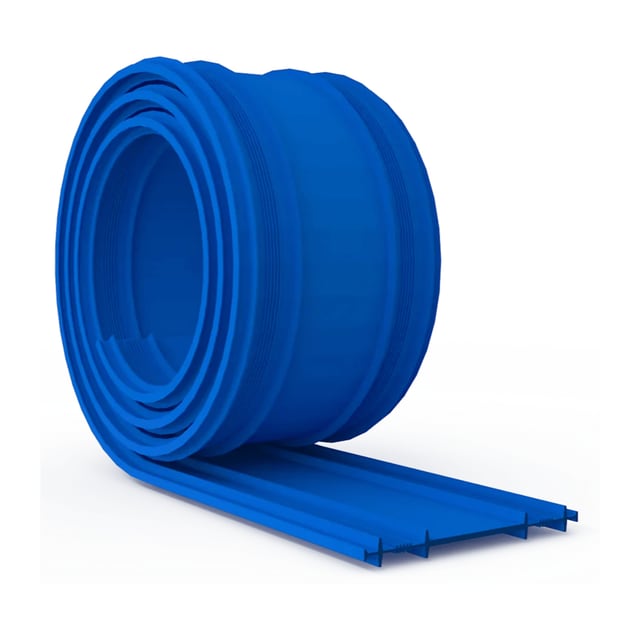
A PVC waterstop is a ribbed strip of flexible PVC cast into the concrete across a construction joint or an expansion joint. Concrete placed in two pours always leaves a cold joint; groundwater, or water held in a tank, can track along it. The waterstop sits across the joint, half embedded in each pour, and its ribs anchor it in the concrete and block the water path. The LeafSeal Waterstop data sheet lists water tanks, swimming pools and elevated water towers, sewers, canals, dams and irrigation works, utility and elevator pits, retaining walls and basement slabs as typical uses.
V profile or O profile
- Type V is used at construction joints, where two pours meet but do not move much: base slab to wall kicker, between wall lifts, tank and lift-shaft walls. It is ribbed on both faces and cast inside the section.
- Type O is used at expansion and settlement joints, where the two concrete blocks move relative to each other; its hollow centre bulb lets the joint open and close without tearing the strip.
LeafSeal Waterstop adds two further profiles: type AR, ribbed on one side only and fixed externally on the outer face of a construction joint, and DW.O250 for joints between diaphragm wall or barrette wall panels.
What V200, O200 or O320 means
The letter is the profile and the number is the width in millimetres: V200 is a type V waterstop 200 mm wide, O200 a type O of the same width. According to its data sheet, LeafSeal Waterstop is made in these sizes:
| Type | Codes | Width | Thickness | Use |
|---|---|---|---|---|
| V (dual-rib, internal) | V200, V250 | 200 / 250 mm | 4.5 mm | Construction joints |
| AR (single-sided rib, external) | AR200, AR250 | 200 / 250 mm | 4.5 mm | Outer face of construction joints |
| O (circular central core) | O200, O250, O320 | 200 / 250 / 320 mm | 4.5 mm | Expansion joints |
| DW.O | DW.O250 | 250 mm | 10 mm | Diaphragm wall and barrette wall joints |
Tolerances are ± 3 % on width and ± 10 % on thickness. Rolls are 20 m long, in blue or yellow.
Sizing rules
The joint detail in the project design governs. Where it leaves the width open, these rules of thumb are commonly used on site:
- The width must exceed six times the maximum aggregate size of the concrete: with 20 mm aggregate, more than 120 mm, so 150 mm or wider.
- The distance from the outer concrete face to the waterstop must exceed half the waterstop width. For a strip placed at the centre of a wall, the wall must be thicker than the strip is wide: a 300 mm wall takes a strip of up to 250 mm.
- The clearance between the waterstop and the reinforcement must exceed twice the maximum aggregate size: more than 40 mm for 20 mm aggregate, so the concrete can flow around the strip.
Installation
- Position the strip in the formwork along the reinforcement, half in the first pour and half left out for the second, and fix it securely before pouring.
- Tie it to the reinforcement with metal wire through its pre-formed holes, at close enough spacing that compaction does not displace or fold it.
- Vibrate the first pour so the concrete is in full contact with the strip, with no honeycombing; clean spilled concrete off the exposed half before the second pour.
- Join lengths by heat welding (butt or overlap weld) with an electric welding knife: heat both ends at the same time until evenly melted, press them together at once and hold the joint until it has cooled; inspect it and re-weld any gap. Weld in a well-ventilated place and avoid breathing the fumes.
- Plan changes of level, bends and intersections before the concrete is placed.
Values to TCVN 9407
TCVN 9407 is the Vietnamese national standard for PVC waterstops used at joints in concrete structures that must be watertight. The LeafSeal Waterstop data sheet gives these values:
| Property | LeafSeal Waterstop | Test method |
|---|---|---|
| Tensile strength | ≥ 12 N/mm² | ASTM D412 / TCVN 9407 |
| Elongation at break | ≥ 250 % | ASTM D412 / TCVN 9407 |
| Shore A hardness | ≥ 65 | ASTM D412 / TCVN 9407 |
Part of a basement system
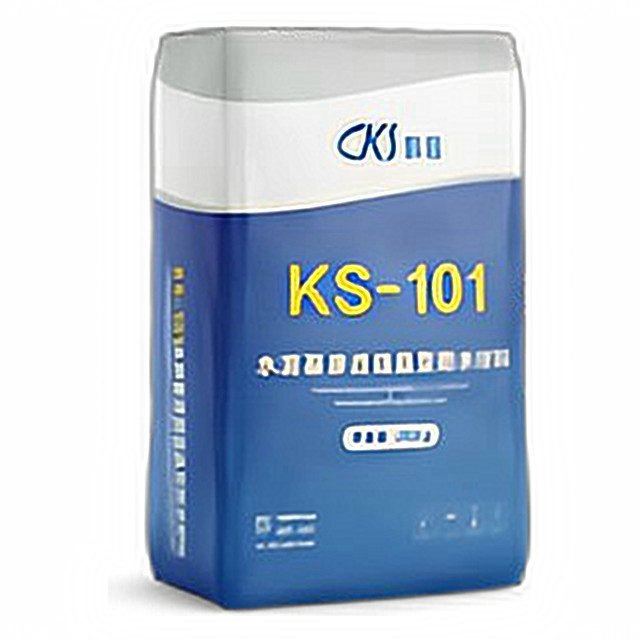
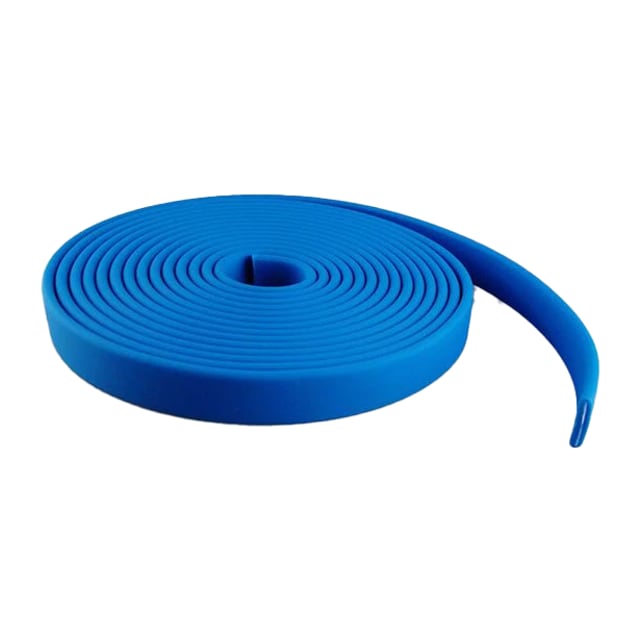
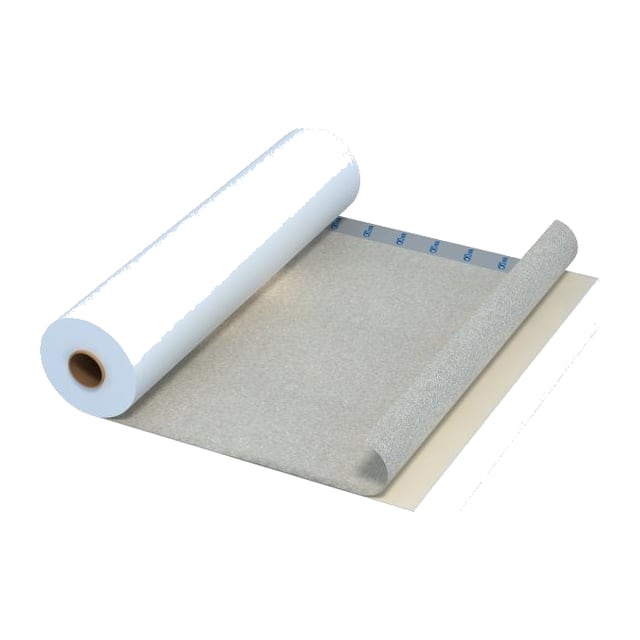
A waterstop seals the joint only; slabs and walls still need a waterproofing layer. In basements it usually works with a pre-applied sheet membrane on the base slab (see the weldable TPO membrane guide) and crystalline slurry such as Keshun KS-101 at construction joints and pile heads. At construction joints without significant movement, a hydrophilic swelling bar is another way to seal the joint: LeafSeal Hyperstop is a 20 x 10 mm hydrophilic rubber strip with a volumetric swelling ratio of at least 250 % (ASTM D471), fixed in a groove or with nails or adhesive; it is not suitable for expansion joints or for concrete elements less than 150 mm wide.
Waterstop product pageBasement sectionsRequest a quotation
Profiles, sizes, values and installation steps from the LeafSeal Waterstop TDS, Version 01 (06/2026); swelling bar figures from the LeafSeal Hyperstop TDS. The sizing rules are common site practice, not manufacturer data.