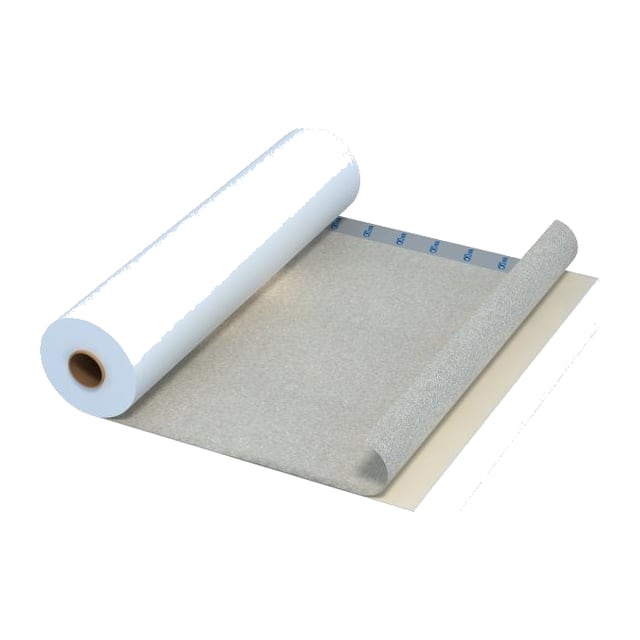
PU waterproofing membrane: when to use single-component polyurethane and what the KS-929C data sheet says
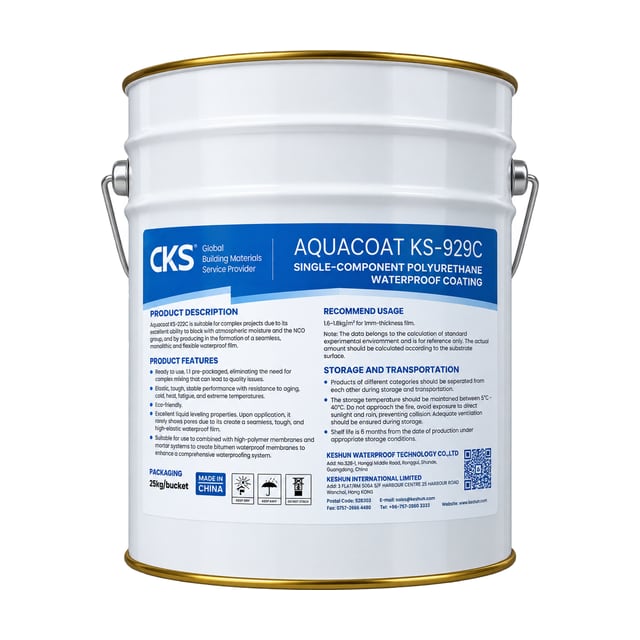
PU waterproofing is a liquid-applied polyurethane that cures on the substrate into a seamless elastic membrane. Because it is poured and spread rather than unrolled, it has no laps or seams and follows every pipe penetration, upstand and internal corner. This guide covers where single-component PU fits, the figures on the Keshun Aquacoat KS-929C technical data sheet and how the system is built up on site.
Where PU waterproofing is used
- Roof slabs and terraces under a screed and tiles, or exposed with a weathering top coat.
- Wet areas: bathrooms, kitchens, balconies and loggias, where many pipe penetrations make sheet membranes hard to detail.
- Car park decks and bridge decks that need an elastic membrane able to bridge moving cracks.
- Below-grade works in combination with sheet membranes, as part of a complete waterproofing system.
Single-component PU vs. two-component systems
Single-component polyurethane such as Keshun Aquacoat KS-929C cures with moisture from the air: the pail is opened, stirred and applied, with no batching or mixing ratio to get wrong. Two-component polyurethane and spray polyurea cure by reaction between two parts; polyurea needs heated plural-component spray equipment and a trained crew, and is chosen for large areas or high mechanical loads. For most roofs and wet areas applied by hand, single-component PU is the practical choice.
KS-929C technical figures
| Property | Value | Test method |
|---|---|---|
| Tensile strength | 2.0 MPa | ASTM D412, modified |
| Elongation at break | 500 % | ASTM D412, modified |
| Adhesion to concrete | ≥ 1.0 N/mm² | ASTM D7234 |
| Watertightness at 3 bar | No penetration | BS EN 14891 |
| Crack-bridging ability | ≥ 3.0 mm | BS EN 14891 |
| Tear strength | ≥ 15 N/mm | ASTM D624 |
Elongation of 500 % and crack bridging of at least 3.0 mm are the figures that matter on a roof slab: the membrane keeps following the concrete as it moves with temperature. Watertightness at 3 bar (about 30 m of water head) covers the hydrostatic pressure met in building work.
System build-up and consumption
- Primer: Keshun FL1101 solvent-free epoxy primer, 0.25–0.35 kg/m², on concrete with moisture below 5 %.
- Membrane: two coats of KS-929C, 1.6–1.8 kg/m² per 1 mm of film; actual consumption depends on the substrate.
- Protection: a screed and tiles, or, where the membrane stays exposed, a weathering-grade top coat of Keshun Aquacoat 680 (6.0 MPa tensile strength, 500 % elongation, UV-resistant).
Packaging is a 25 kg pail with a 6-month shelf life, stored at 5–40 °C.
Application steps
- Substrate: cured, sound concrete free of oil and dust; repair cracks and honeycombs; round internal corners and reinforce pipe penetrations.
- Prime with FL1101 and let it dry.
- Stir the pail gently with a mixer to limit air entrainment; use within 30 minutes.
- First coat applied in one direction with a notched trowel, squeegee or roller; let dry 6–12 hours.
- Second coat at right angles to the first; allow 24 hours to cure before the next trade.
A 10-step site video of the KS-929C roof system (Vietnamese narration, English subtitles) is on VNA’s YouTube channel.
Limitations to keep in mind
- Not for drinking-water or food-contact tanks.
- Exposed surfaces need the Aquacoat 680 top coat or a protective layer; the membrane itself is not a wearing surface.
- Use the material within 30 minutes of opening and stirring the pail, as the data sheet requires.
Where to buy in Vietnam
VNA distributes Keshun products in Vietnam from warehouses in Ho Chi Minh City and Hanoi. Single pails are sold on VNA’s Shopee store; projects receive a quotation by quantity together with layer build-up and the technical dossier.
Buy on Shopee (Vietnam)KS-929C product page
Figures from the Keshun Aquacoat KS-929C TDS (2024), CKS FL1101 TDS and Aquacoat 680 TDS (Rev. 2026). For a submittal dossier or system proposal, contact VNA.